Best Patron Saint Pendants for Orthodox Faith
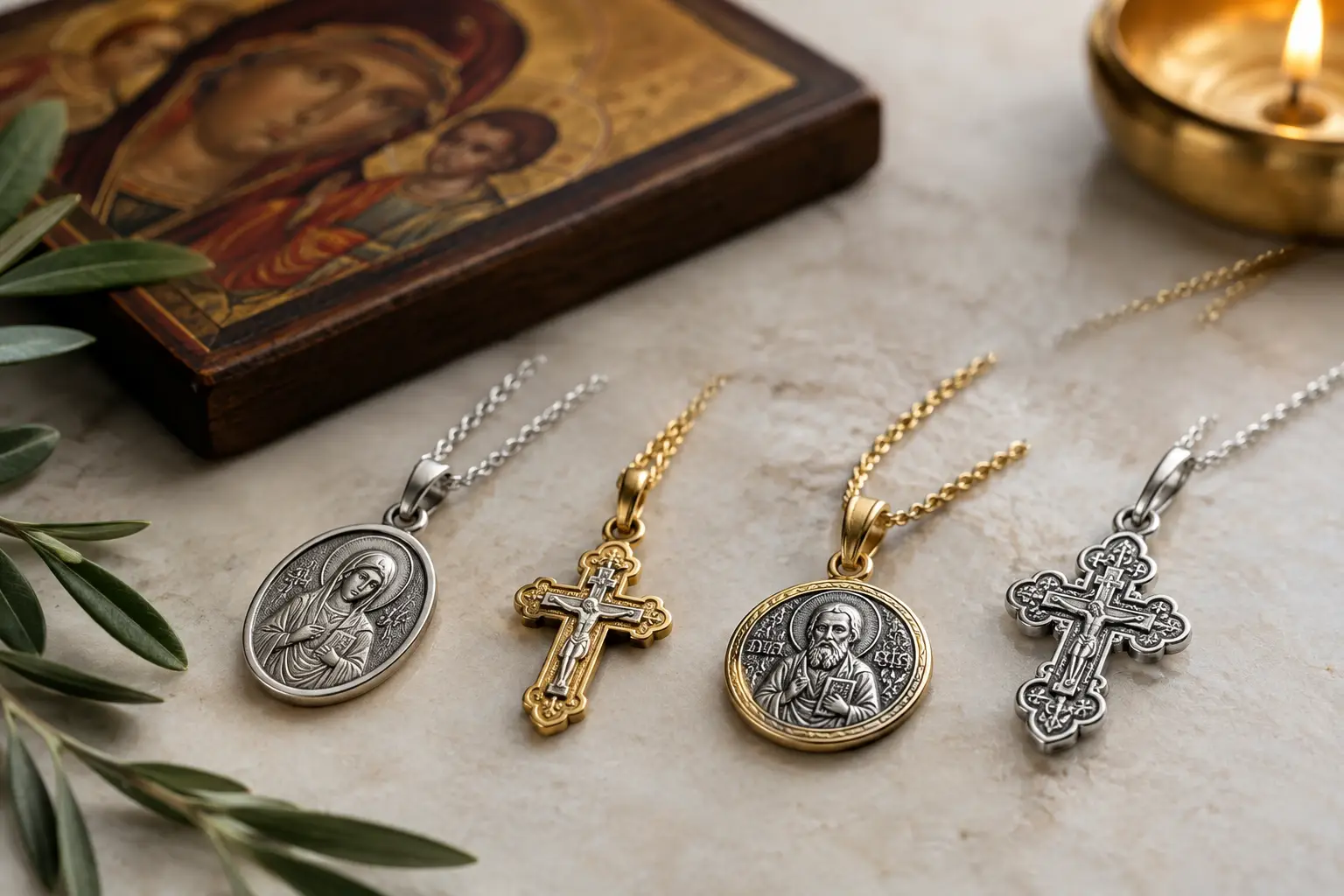
A patron saint pendant is not chosen as an ornament alone. Worn near the heart, it can become a quiet reminder to pray, to ask a saint’s intercession, and to remain faithful in the ordinary duties of the day. The best patron saint pendants unite a canonical image, worthy workmanship, and a saint whose holy life speaks personally to the wearer.
For Orthodox Christians, the question is not simply which pendant looks most beautiful. It is which sacred image will serve as a faithful companion in prayer for many years. Whether selected for a baptism, a name day, a graduation, or a loved one far from home, a saint pendant is a gift that carries both affection and spiritual purpose.
What Makes a Patron Saint Pendant Worth Choosing?
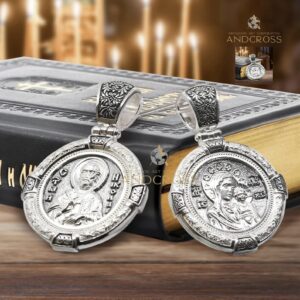
An Orthodox pendant should first honor the saint depicted. The image ought to be reverent and recognizable, following the spirit of traditional Orthodox iconography rather than treating the saint as a fashion motif. A well-made pendant may show the saint with a cross, Gospel book, blessing hand, or other attribute connected to his or her life and witness.
Material also matters. Fine silver, sterling silver, and gold-accented silver have long been fitting materials for devotional jewelry because they give dignity to the sacred image and endure daily wear. A carefully executed relief icon, particularly one with fine silver 999 plating or a handmade finish, has depth and clarity that can invite attention during prayer.
The reverse side deserves consideration as well. A cross, prayer, inscription, or the name of the saint can give the piece a more complete devotional character. Some people prefer a smaller, simple pendant for everyday wear; others choose a larger medallion with detailed imagery for a special gift. Neither choice is more pious by itself. The right size depends on how the pendant will be worn and cherished.
The Best Patron Saint Pendants Begin With a Name
For many Orthodox Christians, the natural first choice is the saint received at baptism or the saint whose name they bear. A namesake saint is not merely a family custom. He or she is a heavenly intercessor, remembered in prayer and honored on the name day. A pendant bearing that saint’s image is especially fitting for a baptismal child, a godchild, or an adult entering more deeply into the life of the Church.
If the baptismal name is not known, or if a gift is meant to mark a particular need or calling, another beloved saint may be appropriate. The choice should be made with care, reading about the saint’s life and asking how that witness may strengthen the recipient’s faith.
Saint Nicholas the Wonderworker
Saint Nicholas is among the most beloved saints for adults and children alike. Known for mercy, generosity, and care for those in need, he is often chosen for family gifts, travel, and occasions when one wishes to express protection and loving concern. A pendant of Saint Nicholas makes a meaningful gift at Christmas, on a name day, or for someone beginning a new chapter away from home.
Saint George the Victorious
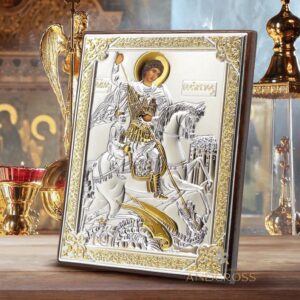
Saint George is traditionally depicted as the courageous martyr who overcame the dragon. His image speaks of steadfast confession of Christ in the face of fear and temptation. A Saint George pendant is often selected for a son, godson, soldier, graduate, or anyone who needs encouragement to meet life’s struggles with faith and courage.
Saint Spyridon of Trimythous
Saint Spyridon, the humble wonderworker and bishop, is deeply loved by Orthodox faithful who seek his prayers in difficult circumstances. His life teaches simplicity, compassion, and trust in God’s providence. A pendant with his image can be a thoughtful choice for someone facing financial uncertainty, a move, family burdens, or a decision requiring patience and humility.
The Guardian Angel
A Guardian Angel pendant is especially appropriate for a child, a baptism, or a first Communion gift. It reminds the wearer that God grants each baptized Christian a guardian angel to guide and protect. The image is tender without being sentimental, and it remains a fitting devotional gift throughout life.
Other saints may be even more personal: Saint Olga for a woman named Olga, Saint Alexander Nevsky for Alexander, Saint Xenia of Saint Petersburg for one seeking comfort and humility, or Saint Panteleimon for those praying for healing. The most meaningful choice is often the saint whose name, feast day, or holy life has become part of the recipient’s prayer.
Choosing Materials for Daily Wear and Gift Giving
A pendant intended for frequent wear should have a secure bail, a well-defined image, and a finish that will remain beautiful with ordinary care. Silver is a traditional and practical choice. Its quiet brightness suits both men and women, and it pairs naturally with a silver chain or a simple cord.
Gold accents can bring warmth and distinction to a saint pendant, particularly for baptisms, anniversaries, and milestone gifts. They allow details such as halos, crosses, or borders to stand out while preserving the traditional appearance of the icon. For a more personal offering, custom work in silver, platinum, or multicolored gold may be considered when the desired saint or inscription is not readily available.
Do not choose a pendant by metal alone. A small silver icon with a clear, prayerful image may be more suitable than a larger piece chosen only for weight or ornament. The sacred subject must remain at the center.
How to Give a Saint Pendant Reverently
A patron saint pendant is a natural gift for baptism, a name day, a birthday, Christmas, Pascha, or the departure of a child for college or military service. It can also be given quietly to a friend who is grieving, ill, or carrying a difficult cross. In such moments, the gift says more than “I was thinking of you.” It says, “May this saint pray for you.”
Presentation matters because the occasion is holy. A proper gift case protects the pendant and gives the offering a sense of care. Including a small card with the saint’s name, feast day, and a few words about the saint’s life can help a child or new believer begin a lasting relationship with that heavenly intercessor.
If possible, the recipient may bring the pendant to church to be blessed. The blessing does not turn the pendant into a charm. Orthodox Christians do not wear sacred objects for luck or superstition. Rather, a blessed pendant is received with gratitude and used with faith, calling the wearer to prayer, repentance, and trust in Christ.
Caring for a Sacred Pendant
Daily devotional jewelry needs gentle care. Remove a pendant before swimming, exercising, or using household chemicals, especially if it includes oxidation, gold accents, enamel, or delicate relief work. Store it in a dry gift case or soft pouch when not worn, and wipe silver softly with a clean cloth made for jewelry.
More importantly, treat the image with reverence. A pendant may be worn beneath clothing or visibly, according to personal practice, but it should not be treated casually. If it becomes damaged, repair it when possible rather than discarding it with ordinary items.
A Small Icon for the Road
The finest patron saint pendant is one that leads beyond itself. It may rest quietly beneath a shirt, accompany a traveler across the world, or be held for a moment before a difficult conversation. Yet its true beauty is found in the prayer it awakens: “Holy saint of God, pray for me.”
At Andija, traditional Orthodox pendants are chosen with this purpose in mind: to give the faithful a sacred image made with care, worthy of daily remembrance and worthy of being passed from one generation to the next.