Are Icons Blessed? Orthodox Guidance for the Home
A newly received icon is not simply another beautiful object for the home. It bears the image of Christ, His Most Holy Mother, an angel, or a saint who stands before God in prayer. So, are icons blessed? Often, yes – especially in Russian Orthodox practice – but the answer deserves care, because the Church’s reverence for icons is deeper than a label or a single rite.
Are Icons Blessed in the Orthodox Church?
In many Orthodox parishes, a priest blesses an icon with appointed prayers and holy water before it is placed in a home prayer corner, given as a gift, or carried with particular devotion. This is a venerable and beloved custom. The priest asks the Lord to send down His blessing upon the icon and upon those who venerate it with faith, so that the image may strengthen them in prayer, peace, and remembrance of God.
This practice is especially familiar in Russian Orthodox life. A family may bring a new icon to church to be blessed, or receive it already blessed from a monastery, temple shop, or Orthodox artisan. Icons made in monasteries are often connected with the prayerful life of the community that produced them. A blessed icon can therefore be a particularly meaningful choice for a baptism, wedding, name day, house blessing, or a loved one’s time of illness.
Yet Orthodox practice is not identical in every local Church. Some traditions do not ordinarily bless each individual icon. They understand a properly made, canonical icon to belong already to the Church’s sacred tradition through the holy person or event it depicts and through the Church’s long-established use of icons in worship. In these places, the icon may be placed reverently in the home without a separate rite.
There is no contradiction in this. Whether an icon is individually blessed or received according to local custom, it is never treated as a charm, talisman, or object with automatic spiritual power. Christians do not pray to wood, paint, silver, or an engraved surface. We venerate the person depicted, directing honor toward Christ, the Theotokos, the angels, and the saints.
What a Blessing Means
A blessing sets something apart for a godly purpose. When an icon is blessed, the Church asks that it serve the faithful as a holy aid to prayer. The blessing does not “put God inside” an object, nor does it change an image into a magical safeguard against sorrow or danger.
Rather, it calls the Christian back to the truth the icon proclaims. Before the icon of Christ, we confess that the Son of God truly became man. Before the icon of the Theotokos, we honor the one who bore God in the flesh. Before the image of Saint Nicholas, Saint George, Saint Spyridon, or one’s Guardian Angel, we ask their prayers and remember that holiness is possible in an ordinary human life surrendered to Christ.
The Seventh Ecumenical Council defended this veneration of holy images, teaching that honor shown to the image passes to its prototype. This distinction matters. Worship belongs to God alone. Veneration is the reverent honor given to those who belong to Him.
A priest’s blessing is therefore not a substitute for faith, repentance, prayer, participation in the Mysteries, or life in the Church. An icon is most fully received when it becomes part of a living prayer rule: the sign of the cross, a candle or lampada, the morning and evening prayers, and the quiet calling upon the Name of the Lord.
Should You Have a New Icon Blessed?
If your parish priest blesses icons, it is good and proper to ask him to bless a newly acquired icon. Bring it respectfully, preferably before placing it permanently in your prayer corner. This is a simple act of humility: rather than treating a sacred image as private decoration, you receive it in the life and prayer of the Church.
If you purchase an icon described as blessed, monastery-made, or blessed at a holy place, it may already have received a blessing. Still, there is no harm in asking your priest if you are uncertain. He can advise you according to the practice of your jurisdiction and the needs of your household.
If your parish does not have a custom of blessing individual icons, do not be troubled. Place the icon with reverence, make the sign of the cross, and begin to pray before it. What matters is not anxiety over a certificate or wording in a product description, but faithful use of the image in a Christian home.
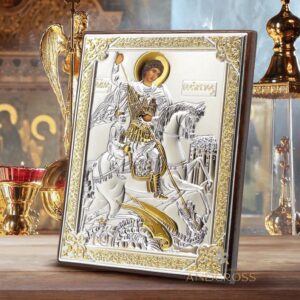
An icon should also be appropriate to Orthodox devotion. Canonical imagery, clear identification of the holy person depicted, and a respectful presentation are important. An image may be finely made in silver plating, painted in rich color, or set in a carefully crafted case, but precious materials alone do not establish its spiritual character. Beauty should serve truth, prayer, and the inherited iconographic tradition of the Church.
Printed Icons, Metal Icons, and Small Travel Icons
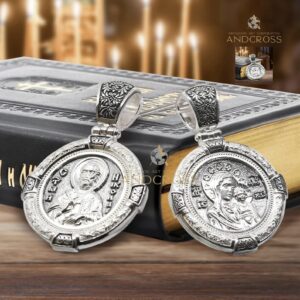
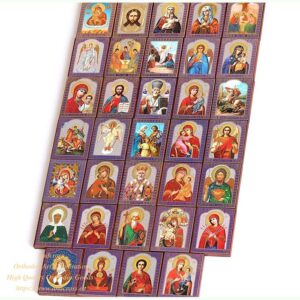
A blessing is not limited to hand-painted wooden icons. Printed paper icons, silver-plated icons, small folding icons, and travel icons may all be treated reverently when they bear a proper Orthodox image. Their size and material affect how they are used, not whether they deserve respect.
A small icon of the Savior or the Theotokos may be kept in a wallet, automobile, bedside area, or travel bag. An icon of a patron saint may be a fitting name-day gift. A larger icon can become the center of a family prayer corner. In each case, avoid placing holy images carelessly among ordinary clutter or using them as fashionable accessories detached from prayer.
How to Place an Icon in the Home
Traditionally, Orthodox Christians place icons in an eastern corner when the home allows it, since Christians turn toward the East in expectation of Christ’s coming. But the practical reality of an apartment, dormitory, workplace, or family home may make this impossible. The direction is a meaningful tradition, not a burden. Choose a clean, quiet, dignified place where you can stand and pray.
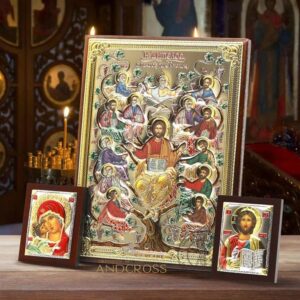
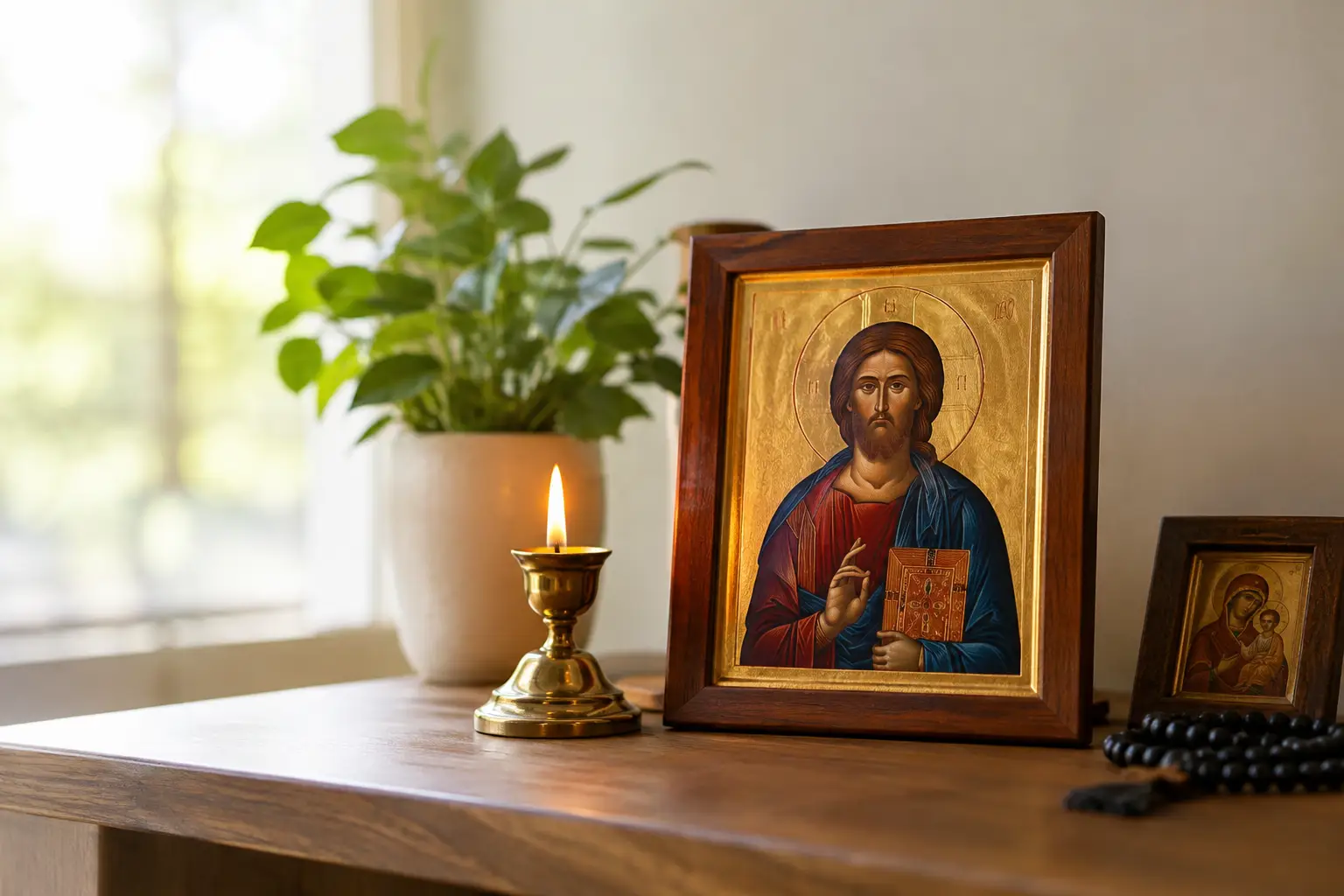
The customary center of a home prayer corner is an icon of Christ and an icon of the Theotokos. Many families add their patron saints, Saint Nicholas the Wonderworker, the Guardian Angel, feast-day icons, or saints especially dear to the household. A cross, prayer book, beeswax candles, and a small icon lamp may also be kept there.
Do not place icons where they are likely to be damaged, splashed, or handled without care. Avoid using them as ordinary wall décor amid unrelated decorative objects. An icon is not less holy because it is in a modest home, but it should be given a place that reflects the reverence of those who live there.
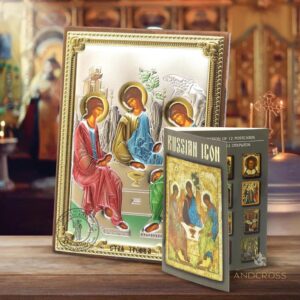
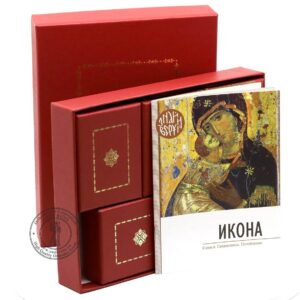
If an icon is a gift, present it with the same intention. A gift case can protect a silver or painted icon and make it suitable for a baptismal child, godchild, newly married couple, or family member returning to the faith. More importantly, include a simple word of prayer: “May this holy image help you remember Christ and call upon the saint’s intercessions.”
Caring for a Blessed Icon
Once an icon has been blessed, it should not be discarded with household waste. If it becomes damaged beyond repair, speak with your priest about the appropriate local practice. In many places, worn sacred articles are respectfully burned or buried rather than thrown away.
For everyday care, keep the icon dry and clean. Dust gently with a soft, dry cloth. Do not use household sprays, abrasive cleaners, or moisture on painted surfaces, wood, gilding, or silver-plated details. If an older icon has cracks, lifting paint, or serious damage, preservation requires skilled care rather than an improvised repair.
A damaged icon is not a sign of failed faith, and an unblessed icon is not an object to fear. The Christian response is peaceful reverence. Ask your priest when guidance is needed, care for the image as a sacred article, and let its presence lead you back to prayer.
The best way to honor a blessed icon is not merely to display it beautifully, but to stand before it with a contrite heart: make the sign of the cross, light a candle when appropriate, give thanks to God, and ask the saints to pray for your home.